Local Weather - Radar & Widget
- 4.1
- Rating
- 100.00K
- Installs
- Free
- Price

 Analysis by App-foxy
Weather apps often try to do too much at once, but Local Weather - Radar & Widget is easier to understand when viewed through one practical idea: keeping local conditions close enough to check before making an everyday decision. I approached it as a weather app rather than a general travel planner, and that distinction matters. Its value is less about replacing every weather service on a phone and more about giving a quick local reference without turning a simple forecast check into a research task.
The app comes from Huju Network Technology CO., Ltd. and is available free of charge for everyone. It has reached over 100 thousand installs and holds a 4.3 average from more than 400 ratings, which suggests that many users find the basic experience useful while still leaving room for individual differences in expectations. It was released on April 14, 2026, and version 1.3.0.0 is the version I would look for when deciding whether the app fits my phone.
My overall impression is that this is most appealing to people who want a straightforward local weather companion. If you need a focused way to check conditions before leaving home, walking the dog, commuting, or planning a short outing, it makes sense. If you expect a professional meteorology dashboard, detailed storm analysis, or a large collection of advanced planning tools, I would look at a more specialized alternative instead.
You May Also Like

 Blood Strike: 2.5 Anniversary
Blood Strike’s Loadouts Turn Every Drop Into a Tactical Gamble
A close look at Blood Strike’s custom loadouts: how fast access to signature weapons reshapes its battle royale rhythm, rewards preparation, and narrows the gap between fights.

 Pandora - Music & Podcasts
Pandora’s Music Is Easy to Start, but Harder to Recover
Pandora’s strength is its low-effort path from a seed to a station. Its weak spot is how much confidence it asks you to place in connection, setup, and quiet recovery.

 8 Ball Pool
 Is Built on Rivalries, Rematches, and Routine
A close look at the rivalries, rematches, shared routines, and unanswered safety questions that turn a quick pool match into a persistent mobile community.

 Samsung Music
’s Quiet Strength Is Playing What You Already Own
Its reach comes less from spectacle than from dependable access to a personal library. That simplicity is both the app’s strongest retention engine and its ceiling.

 AccuWeather: Weather Radar
AccuWeather Review: A Quick, Clear Forecast for Everyday Decisions
For everyday plans, the best forecast is the one you can understand quickly. AccuWeather makes rain timing, radar, and local conditions easy to act on, with a few trade-offs.

 Hill Climb Racing
Why Hill Climb Racing Still Turns Crashes Into One More Run
A tiny car, a bumpy hill and one more upgrade: Hill Climb Racing keeps resurfacing because its simple chaos makes every near-miss feel personal.
More From Our News Desk



Why the local view is the app’s most useful idea
The strongest capability is the emphasis on local weather information. That sounds simple, but location is what turns a forecast from general background information into something I can act on. A broad city forecast may be technically relevant while still being unhelpful when conditions differ between neighborhoods or nearby areas. A local-first approach encourages me to check the place that actually affects my next decision.
That makes the app particularly suitable for short time horizons. Before I leave for work, I want to know whether the conditions around my starting point are likely to make a jacket, umbrella, or different travel choice sensible. Before an afternoon walk, I care more about the weather where I will be than about a distant part of the same metropolitan area. The app’s identity as a local weather assistant supports that kind of quick judgment.
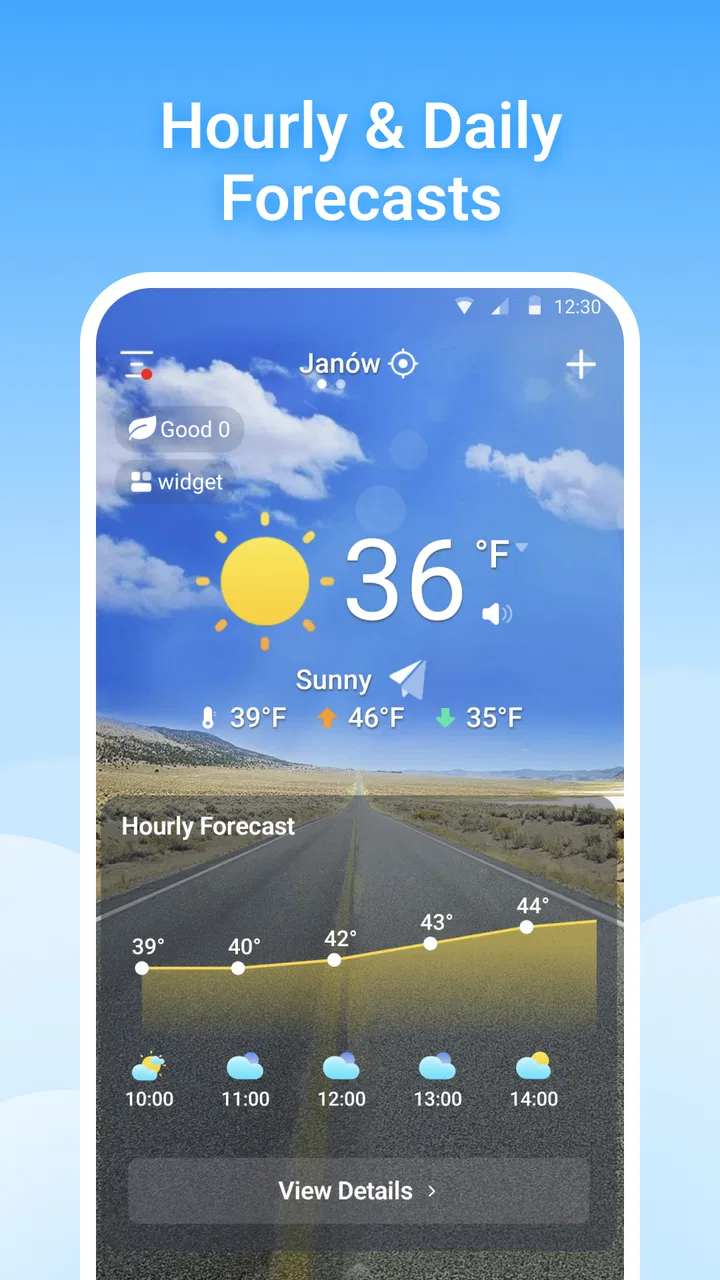
The radar and widget wording also points toward two different ways of using it. A radar view is something I would open when I want a closer look at changing conditions, while a widget is useful when I want weather information visible without repeatedly opening the full app. Those two access styles serve different habits: one supports investigation, and the other supports routine awareness.
The real benefit is reduced friction between noticing the weather and responding to it. I do not have to treat every check as a separate planning session. A quick glance can be enough to decide whether I should wait, leave earlier, carry rain protection, or move an outdoor task indoors.
How I would use the local information
I would begin by treating the app as a decision aid rather than an authority that removes all uncertainty. Weather changes, and a local forecast is still a forecast. The sensible workflow is to check the current local picture, compare it with the timing of my activity, and then leave a little flexibility when the weather looks unstable.
For a normal morning, the widget is the more convenient part of the routine. I can look at the phone before getting dressed and decide whether the day calls for light clothing, a warmer layer, or rain protection. That small step is more useful than opening an app only after I am already outside and discovering that the conditions have changed from what I expected.
For a more uncertain situation, I would open the radar view instead of relying only on a single headline condition. The practical advantage is not that a radar image guarantees what will happen next. It is that visual movement can help me understand whether a weather system appears to be approaching, passing nearby, or moving away. I would use that context to adjust timing, not to make overly precise promises about the exact minute rain will begin.
One useful habit is to check the app twice when an outdoor plan matters: once while preparing and again shortly before leaving. The first check helps with clothing and packing; the second helps with timing. This is a better use of a local weather tool than checking once many hours in advance and assuming the situation will remain unchanged.
A realistic day-to-day scenario
Imagine I have a short walk to a bus stop, a commute across town, and an outdoor errand after work. In the morning, I use the visible weather information to decide whether an umbrella belongs in my bag. Before leaving the office, I check the local view again. If the radar suggests that unsettled conditions are moving toward my route, I might leave earlier or choose a more sheltered option.
That workflow shows where the app can be more useful than a generic glance at a search result. The decision is not simply “is it raining today?” It is “what should I do during the next part of my day, in the place where I will actually be?” A local weather app earns its place when it helps answer that second question quickly.
The same approach works for dog walks, school runs, short bike rides, market visits, and small outdoor jobs. I would not use it to make a high-consequence decision by itself, but I would use it to reduce avoidable surprises in ordinary life. Its strength is practical timing rather than dramatic presentation.
Where the widget changes the routine
A widget can be valuable because it changes the behavior around checking weather. Instead of remembering to open an app, I can make the information part of my normal phone glance. That is especially helpful for people who make repeated short trips or who tend to forget forecasts until they are already ready to leave.
The trade-off is that a widget is naturally less detailed than the full application. It should be treated as a summary and a prompt to investigate further when conditions look uncertain. I would use it for awareness, then open the main view for a closer look before committing to a longer outdoor plan.
There is also a practical setup consideration: the widget is only useful if it is placed somewhere I actually see. Putting it on a rarely visited screen defeats much of its purpose. I would position it near the first screen I check in the morning, then keep the full app available for radar-based follow-up.
This two-level workflow is one of the more useful ways to approach the product. The widget handles passive awareness, while the radar view handles active decisions. Using both for the same purpose would be inefficient; using each at the right moment makes the app feel more purposeful.
What it is like compared with familiar alternatives
The usual alternatives fall into a few groups. A built-in phone weather service is convenient and often enough for a quick temperature check. A search engine is useful when I need a fast answer without installing anything. Larger weather platforms may offer broader coverage, richer maps, alerts, extended forecasts, or tools aimed at travel and outdoor planning.
Local Weather - Radar & Widget makes the most sense when I want a dedicated local check with a visible widget and a radar-oriented way to inspect conditions. Its appeal is focus. I would not choose it simply because I want the longest forecast range or the most technical weather data. I would choose it when the repeated routine of checking nearby conditions matters more than having a crowded feature set.
That focus can be a benefit for people who find large weather apps distracting. It can also be a limitation for users who want everything in one place. Someone planning a multi-day trip, comparing several destinations, or studying severe weather patterns may prefer a service designed around those tasks. For a local commute or a short walk, however, a simpler tool can be easier to use consistently.
Important trade-offs before installing it
The first trade-off is simplicity versus depth. A focused weather app can make routine checks faster, but it may feel limited beside a full meteorological platform. I would decide based on how often I need advanced context. If my decisions are mostly about the next few hours and my immediate area, focus is an advantage. If I regularly need detailed planning information, I would want to compare it with a more comprehensive service.
The second trade-off is convenience versus interpretation. A radar display can make changing weather easier to understand, but it still requires judgment. A moving band on a map does not automatically tell me exactly what will happen at my front door. I would avoid treating visual information as a guarantee and would leave extra time when the consequences of being wrong matter.
The third trade-off concerns the widget. It saves time once it becomes part of my routine, but it also depends on me giving it a visible place on the phone. Users who dislike home-screen widgets may gain less from this part of the experience. They may find a standard weather shortcut or built-in service more convenient simply because it already matches their habits.
Another consideration is the app’s maturity. Version 1.3.0.0 indicates an actively defined product experience, but I would still judge it by whether its current workflow meets my needs rather than assuming it will match the breadth of long-established weather platforms. The 4.3 average is encouraging, yet ratings cannot tell me whether every user values the same balance between a local focus and broader detail.
The free price makes trying it relatively easy, especially for someone who wants to test the widget and local workflow without committing money. I would still spend a few days checking whether the information is useful for my own area and routine. A weather app is only worthwhile when it fits the places and times I actually care about.
Who will get the most from it
I think the best audience is people who make frequent, ordinary decisions based on nearby weather. Commuters, walkers, parents arranging short trips, delivery workers, and anyone with outdoor chores can benefit from having a local check available at a glance. The app is also a reasonable choice for someone who wants a free weather tool without a complicated learning curve.
It may suit users who prefer to separate quick awareness from deeper checking. The widget can answer the first question—what is the local situation like?—while the radar view can answer the next one—does the pattern look stable enough for my plan? That division gives the app a practical role instead of making every feature compete for attention.
I would be more cautious about recommending it as the only weather resource for people involved in demanding outdoor activities, travel planning, or situations where official warnings and specialized information are essential. In those cases, a dedicated service with the relevant depth may be a better primary choice. This app can still be a convenient local reference, but convenience should not be confused with complete professional coverage.
It is also not the obvious choice for someone who wants a broad lifestyle platform built around weather. If the main goal is comparing destinations, organizing a trip, or exploring extensive historical and long-range information, another category of app will probably feel more appropriate. Local Weather - Radar & Widget is strongest when the question is immediate and personal: what should I expect near me, and how should that affect what I do next?
My final assessment after using the focused approach
I like the app most when I treat it as a small daily utility rather than a complete weather command center. The local emphasis, radar-oriented checking, and widget access work together around a clear use case: helping me make a quick decision about nearby conditions. That is a meaningful benefit because weather information is most valuable when it changes an action at the right moment.
Its limitations are the natural cost of that focus. Users seeking extensive analysis may outgrow it, and anyone expecting a forecast to remove uncertainty may be disappointed by the need for personal judgment. The widget also delivers its best value only after I deliberately build it into my phone routine.
For me, the free cost and Everyone age rating make it easy to recommend as a low-risk option for everyday local checks. I would install it if I wanted a cleaner weather habit centered on my immediate area, especially for commuting and short outdoor plans. I would skip it in favor of a more specialized alternative if my weather needs were technical, travel-heavy, or dependent on detailed warnings. Used for the job it is designed to handle, Local Weather - Radar & Widget is a practical companion that earns its place through quick, local awareness rather than an oversized list of promises.
FAQs for Local Weather - Radar & Widget
01What features does Local Weather - Radar & Widget offer?
Local Weather - Radar & Widget provides real-time weather updates, detailed radar maps, and customizable widgets for your home screen. You can track severe weather alerts, view hourly and weekly forecasts, and get insights into humidity, wind speed, and more. It’s designed to keep you informed about weather conditions anytime, anywhere.
02Is Local Weather - Radar & Widget free to use?
The app offers a free version with basic features, including current weather updates and simple radar maps. However, for more advanced features like ad-free usage, detailed radar, and personalized widgets, a premium subscription is available. This ensures you receive the most comprehensive weather information without interruptions.
03How accurate is the weather information provided by the app?
Local Weather - Radar & Widget sources its data from reliable meteorological services, ensuring high accuracy in weather predictions. The app continuously updates its information to reflect the latest weather conditions. Additionally, user feedback is consistently monitored to improve forecast accuracy and app performance.
04Can I customize the widget on my home screen?
Yes, Local Weather - Radar & Widget allows extensive customization of its widgets. You can select different sizes, themes, and data points to display, such as temperature, conditions, or forecast summaries. This feature ensures that you get the most relevant weather information at a glance, tailored to your preferences.
05Does the app provide severe weather alerts?
Absolutely. The app is equipped to send real-time severe weather alerts, including notifications for storms, heavy rain, or extreme temperatures. These alerts help you stay prepared for any sudden changes in weather conditions, ensuring safety and allowing you to plan your activities accordingly.
Pros
- Accurate real-time weather updates.
- User-friendly interface and design.
- Customizable widgets for quick access.
- Detailed radar maps with multiple layers.
- Severe weather alerts and notifications.
Cons
- Ads can be intrusive at times.
- Frequent updates may cause minor bugs.
- Requires internet for real-time features.
- Limited free features
- paid subscription needed.
- Battery usage can be high with GPS on.

Local Weather - Radar & Widget
Gallery